Every game in our studio starts with a question. For Ludo Fighters: Battle Board it was a simple one: what if the pieces in Ludo were not pieces at all, but soldiers, and a capture was something you could see and hear?
It started in Game Collection
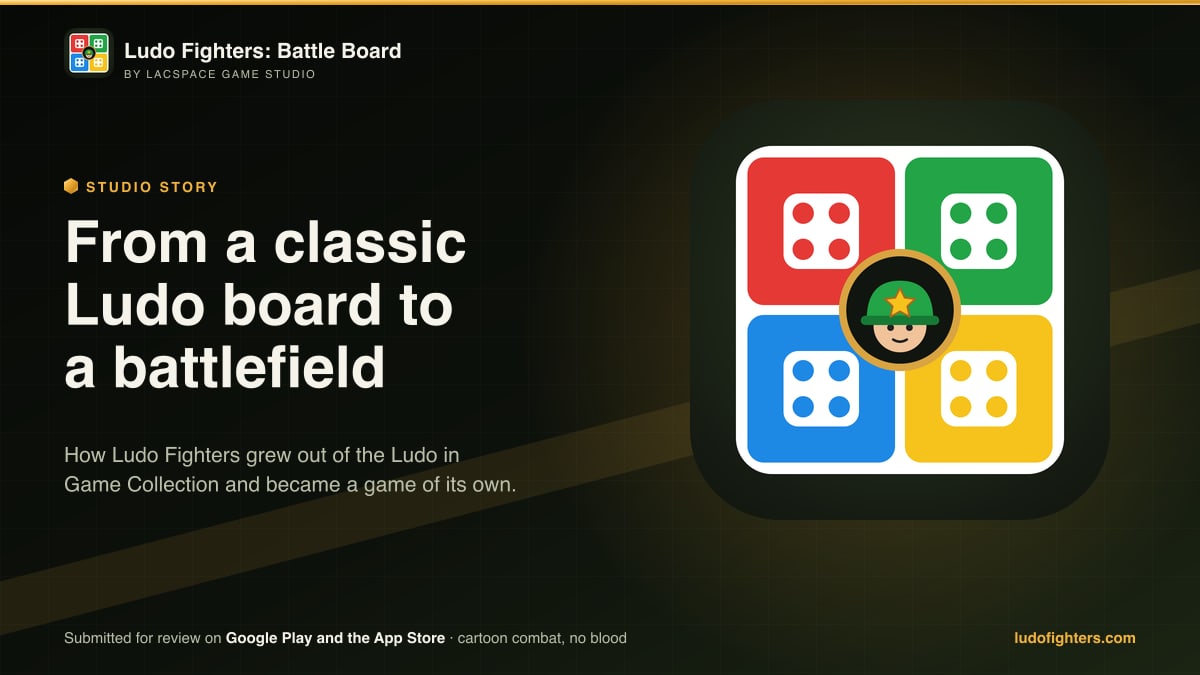
Our Game Collection app has a classic Ludo that families play together. The first soldiers and fights were tried there. They worked, and they also made it obvious that a game with cartoon gun fights and online play with strangers is a different game for a different audience from a family games app. So we split it out. Ludo Fighters became its own app with its own store listing and its own age rating, and the Ludo in Game Collection stayed classic.
Soldiers that feel alive
A soldier standing still on a square is just a pawn with a helmet. So they walk square to square with a leg cycle and footsteps on each battlefield’s ground. They have moods: calm, nervous when an enemy is behind them, a salute when they can be picked, a cheer when they reach home. And they speak: recorded voice lines for the big moments in a match, each with a speech bubble over the soldier who says it, and since version 1.1.0 an announcer for the biggest knock-outs.
A fight that never slows the game down
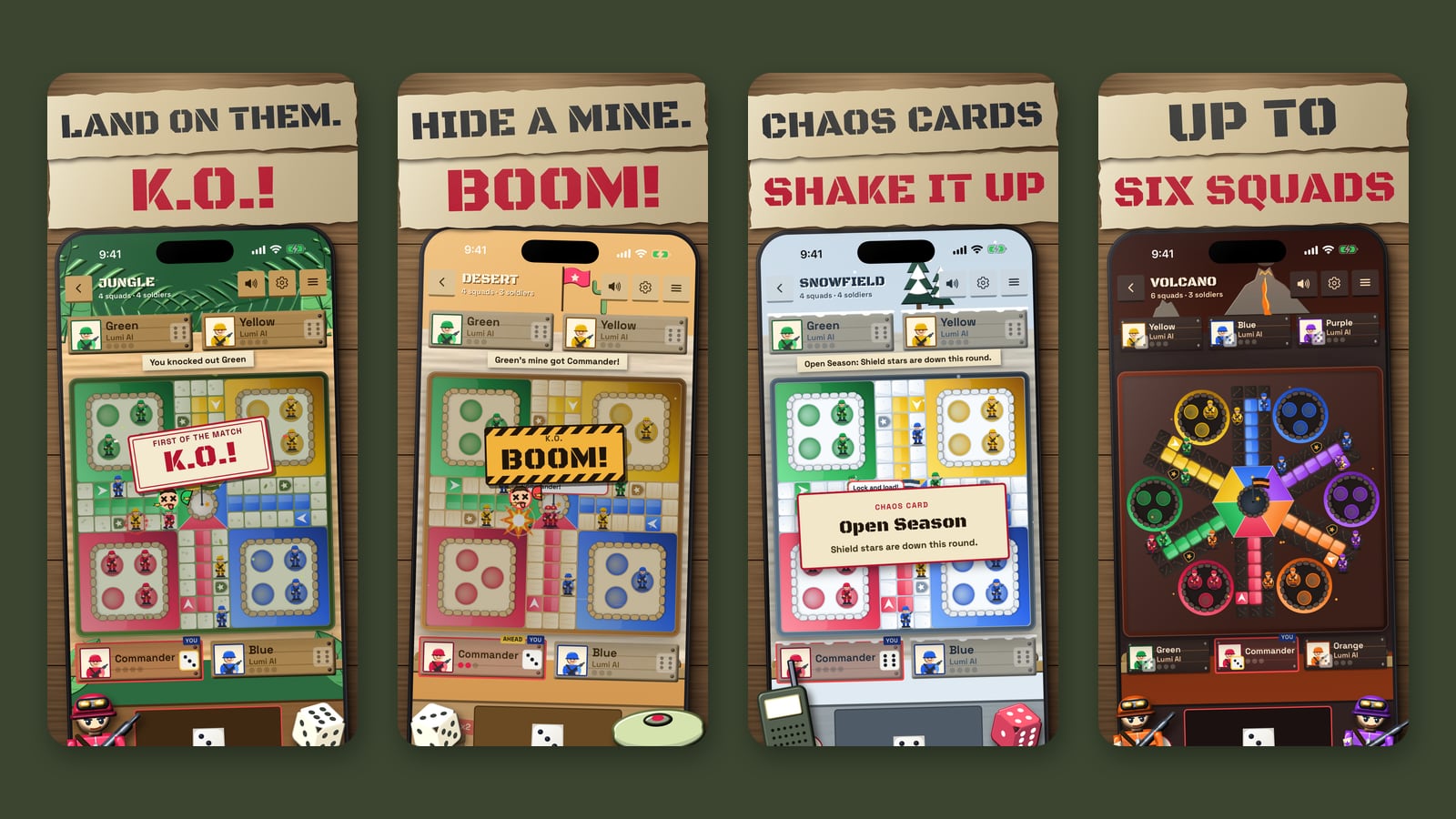
The hardest design question was time. A fight has to feel big, and Ludo has a lot of captures. We settled on about 1.3 seconds at normal speed, with every animation skippable, a Fast animations rule that brings it to about 0.8, and a Reduce motion setting that skips it entirely. The second rule was fairness: the dice decide, and the fight only shows the result. A fight never adds a second roll, and nobody loses because of an animation. The fight, frame by frame.
Then came variety. A fight that looks the same every time gets old, so each one picks a weapon: pistol, rifle burst, shotgun, a sniper shot that is likelier across a long gap, or a grenade on an arc. Before you roll, target rings show which enemies are in reach.
Six battlefields, one board
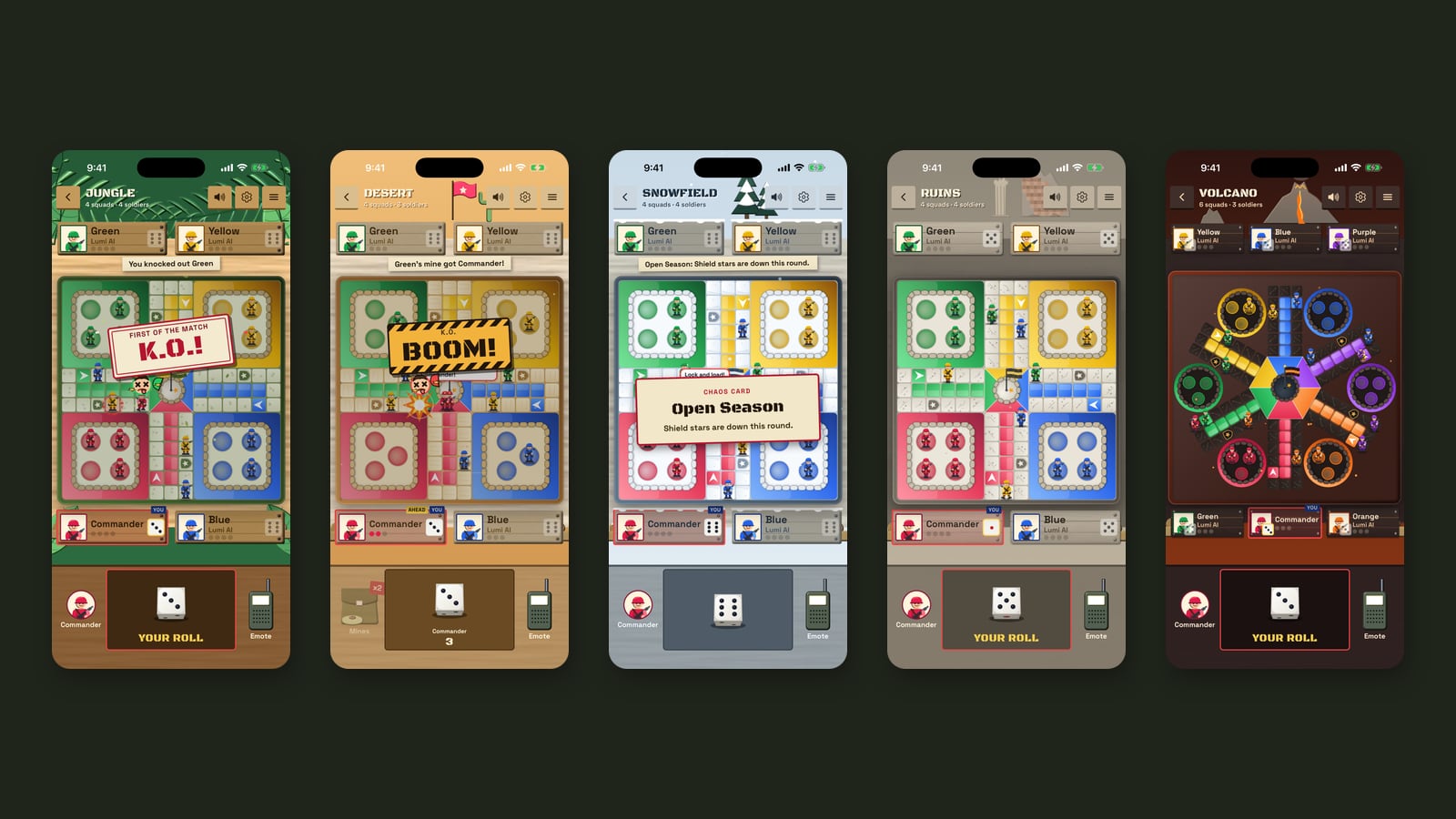
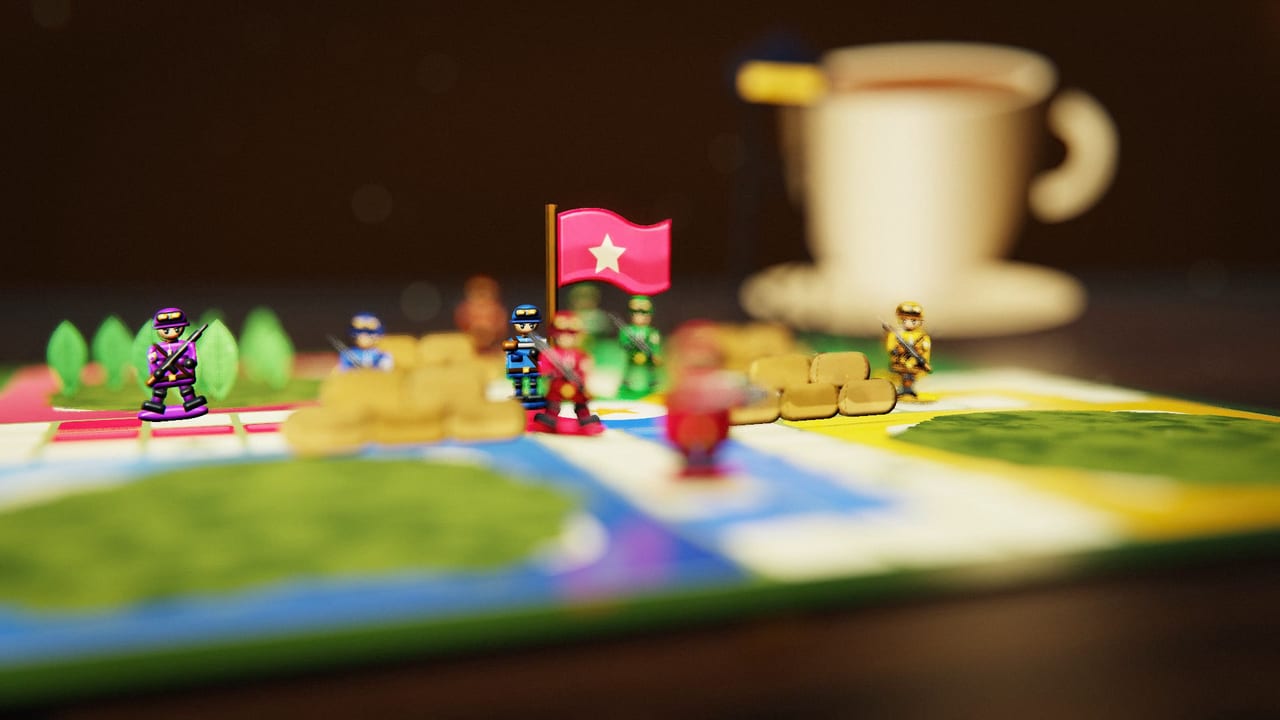
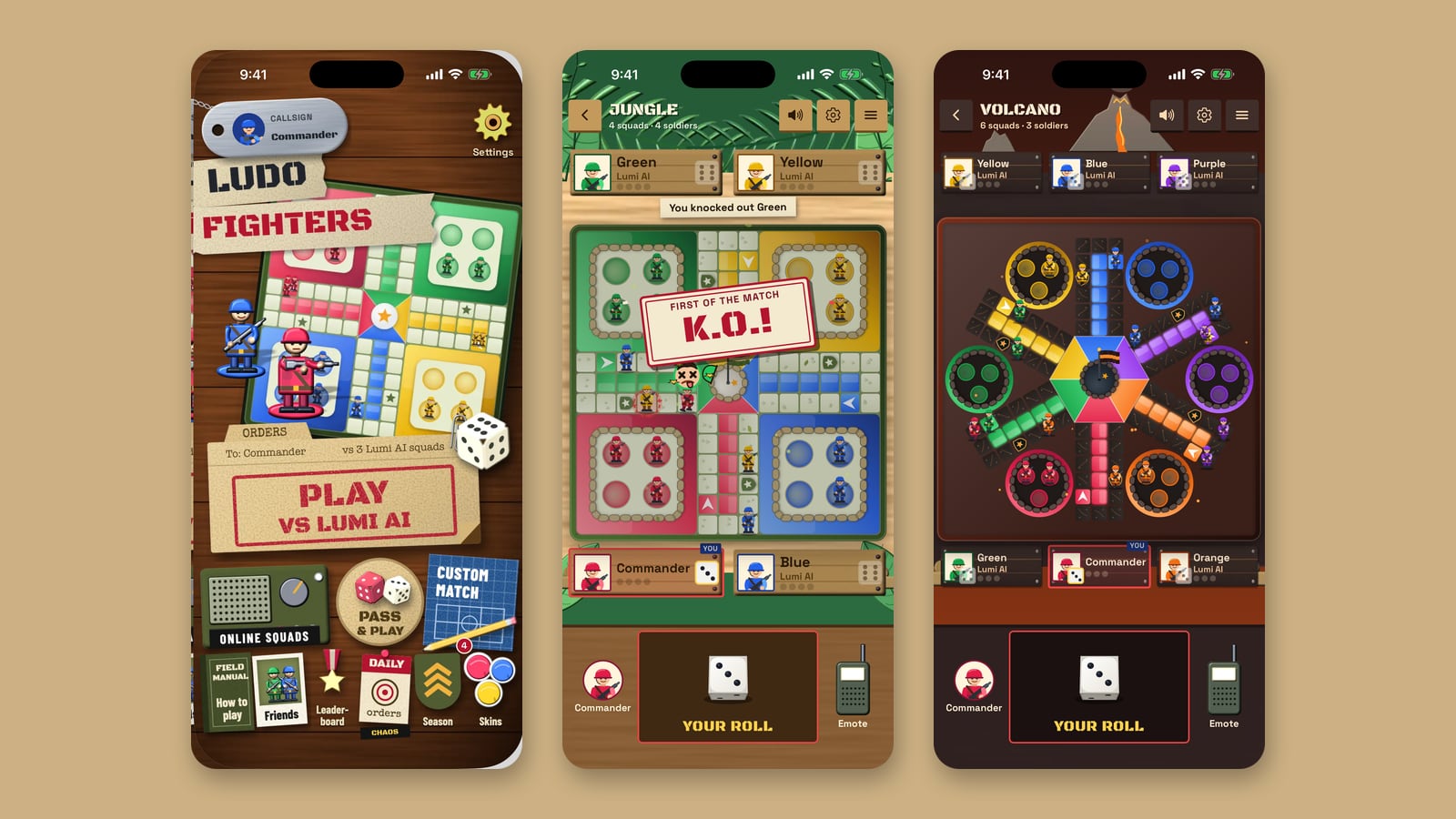
Bases became sandbag bunkers with foxhole nests, stars became shield bunkers, and the centre became a headquarters with a waving flag. Each battlefield has its own terrain and ambient life: fireflies and leaves in the jungle, wind and sand in the desert, snowfall on the snowfield, and a searchlight on Night Ops, where the home lanes glow. Version 1.1.0 added Ruins and Volcano. The battlefield changes the look and the sound; the rules stay the same unless you switch on a battlefield twist, such as rubble cover on Ruins or lava vents on Volcano.
From four squads to six
Classic Ludo seats four. Game nights often have more people than that, so we built a six-house board with Purple and Orange squads, and let every squad have anywhere from 1 to 6 soldiers. The board is sized from the real screen, the dice got smaller and the board got bigger, and in pass and play the far side of the table gets its own dice, facing whoever sits there. Every mode and house rule.
Sound you can turn down
Sound does a lot of the work in a game like this: recorded dice, footsteps for every map, a reload, gunfire and a ricochet, plus a battle march made in our studio. During a match there is no background music, only the battlefield’s ambience and short stings for a fight, a win and a loss. Music, game sounds and squad voice each have their own volume slider, because a family table and a player with headphones want different things.
A new name in the stores and a new icon
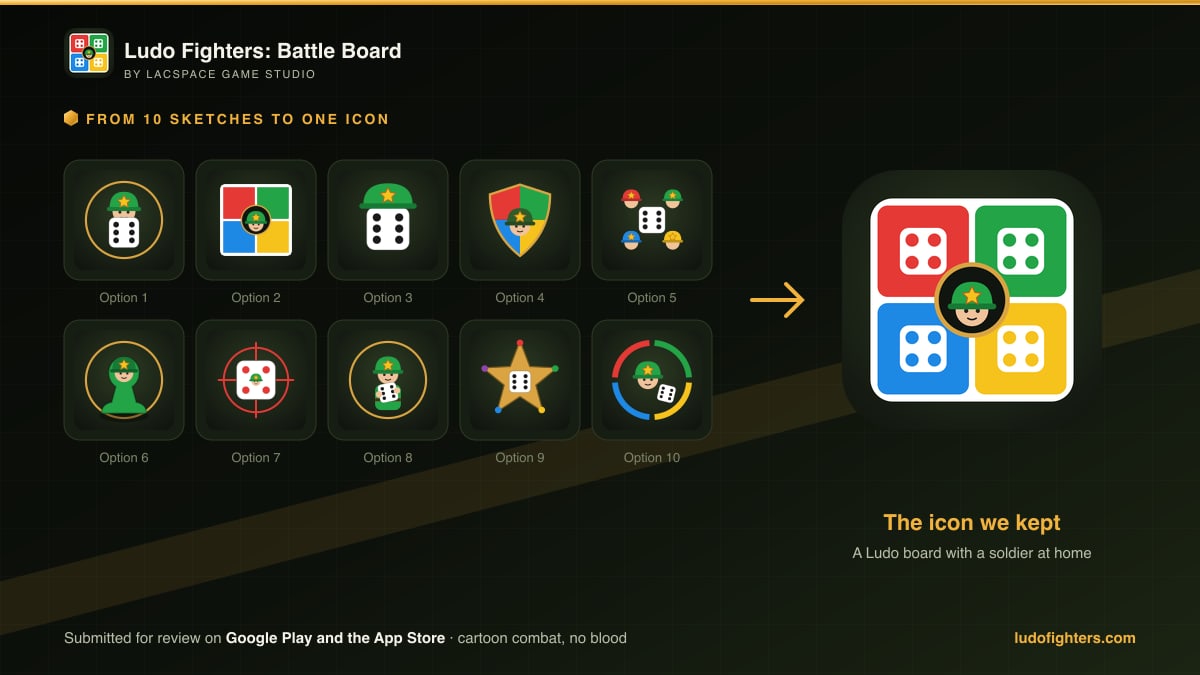
In the stores the game is called Ludo Fighters: Battle Board. For the icon, we drew ten options before choosing the one that says Ludo first: a four-colour board with red, green, blue and yellow quadrants and a helmeted soldier at home in the centre.
What came next
Friends, shareable K.O. clips, more battlefields and a 2v2 team mode all arrived in version 1.1.0, along with landmines, killstreaks, seasons and a redesigned home and match screen. Here is everything that changed, and how the extras fit on top of classic Ludo. Through all of it, the classic mode stays simple, nothing is for sale, and Lumi AI keeps playing with the same dice as everyone else. How Lumi AI plays.
The game also has its own film. Read how Nobody Told the Board was made.
Keep reading: Ludo Fighters: Battle Board, the battle Ludo game · How every capture becomes a gun fight · Modes, six squads and house rules · Lumi AI’s five personalities · The making of Nobody Told the Board · What’s new in Ludo Fighters 1.1.0
Ludo Fighters: Battle Board is a game by Lacspace Game Studio, part of Lacspace Corporation Pvt Ltd. As of 9 November 2026 the current version is 1.1.0, live on Google Play and the App Store, and the stores show its official age rating on their pages. Combat in the game is cartoon only, with no blood. There are no real-money stakes in the game.
Frequently asked questions
Is Ludo Fighters part of Game Collection?
No. It started as an idea in Game Collection’s Ludo and became a separate app. Game Collection keeps classic Ludo without battle features.
Why is Ludo Fighters a separate app?
A game with cartoon gun fights and online play with strangers needs its own store listing and age rating, separate from a family games app.
What are the six battlefields in Ludo Fighters?
Jungle, Desert, Snowfield, Night Ops, Ruins and Volcano. Each has its own terrain, ambience and effects. Ruins and Volcano each have an optional twist.
What has been added since launch?
Version 1.1.0 added landmines, killstreaks, Bounty, Supply drops, Chaos cards, Squad Wars, two battlefields, Match Builder, Daily orders, seasons, friends and a new home and match screen.