Every trader eventually asks the same question: when do I stop practising and start trading for real? Switch too early and you donate your savings to the market as “tuition.” Switch too late and you never grow. The honest answer isn’t a date — it’s a set of signals. Let’s compare the two, then look at how to know you’re ready.
Same skills, very different stakes
The mechanics of paper and real trading are identical: you read a chart, set your risk, place an order, manage the position. What changes is the cost of being wrong — and the emotion that comes with it.
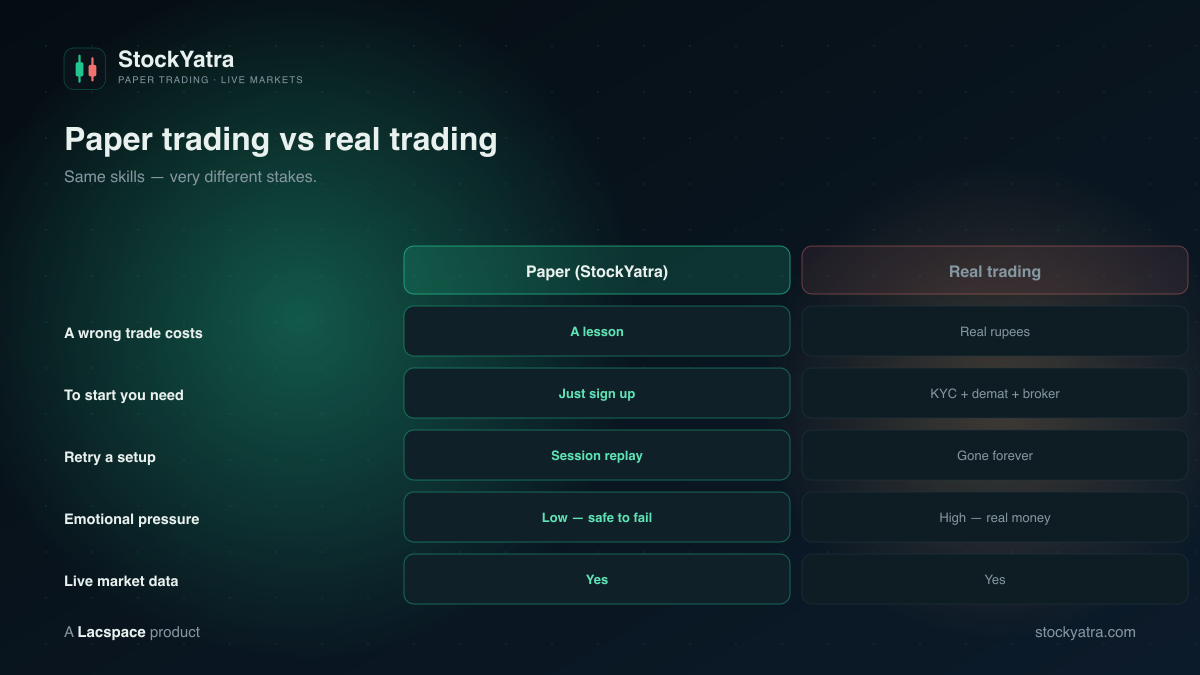
On paper (like StockYatra), a wrong trade costs a lesson, you just sign up to start, and you can replay a setup and try again. In real trading, a wrong trade costs real rupees, you need KYC + demat + a broker, and a fumbled setup is gone. Same data, same skills — wildly different consequences.
5 signs you’re ready for real money
Don’t switch on a feeling. Switch when these are genuinely true of your paper trading:
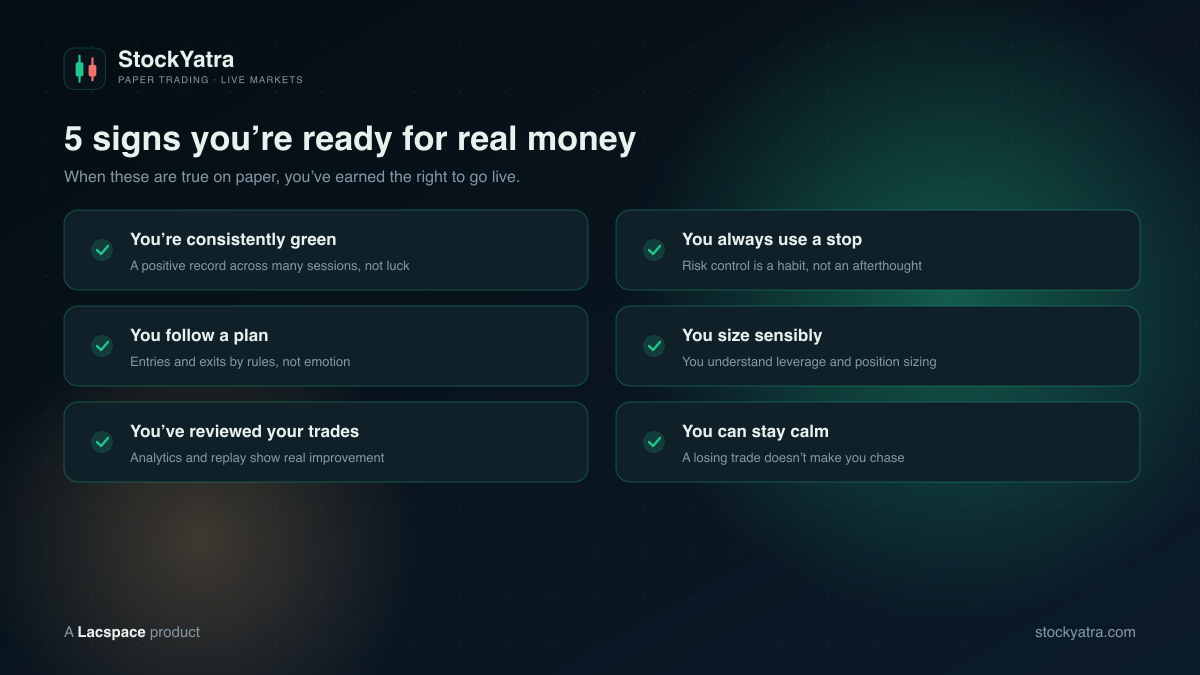
- You’re consistently green — a positive record across many sessions and market conditions, not one lucky run.
- You always use a stop — protecting capital is a reflex, not an afterthought.
- You follow a plan — you enter and exit by rules, not emotion.
- You size sensibly — you understand leverage and position sizing, and never bet the account.
- You’ve reviewed your trades — analytics and replay show you’re actually improving.
The smart way to make the switch
When you do go live, start small — the goal is to add the one thing paper can’t teach (real emotion) gradually, not all at once. And keep practising new strategies on paper even after you’re trading real money. Build your record risk-free first at stockyatra.com.
StockYatra in late 2026: what has changed since this was written
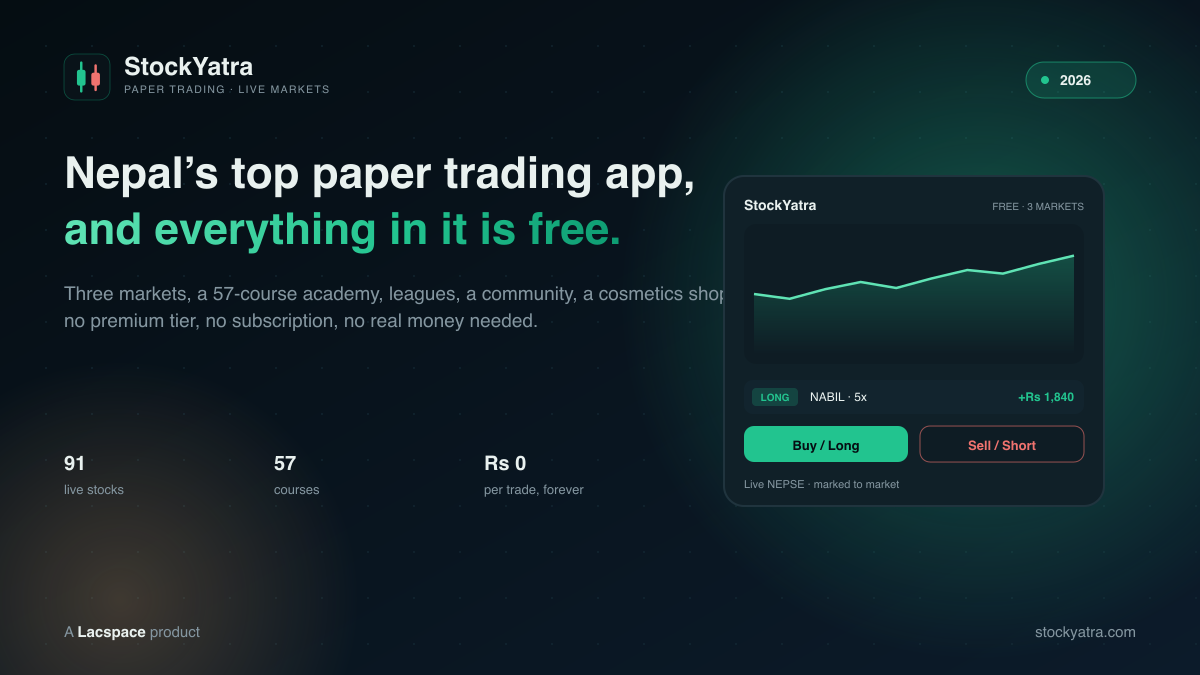
StockYatra keeps shipping, so here is the current picture in one place. Everything below is free — there is no premium tier, no subscription, and real money is never required.
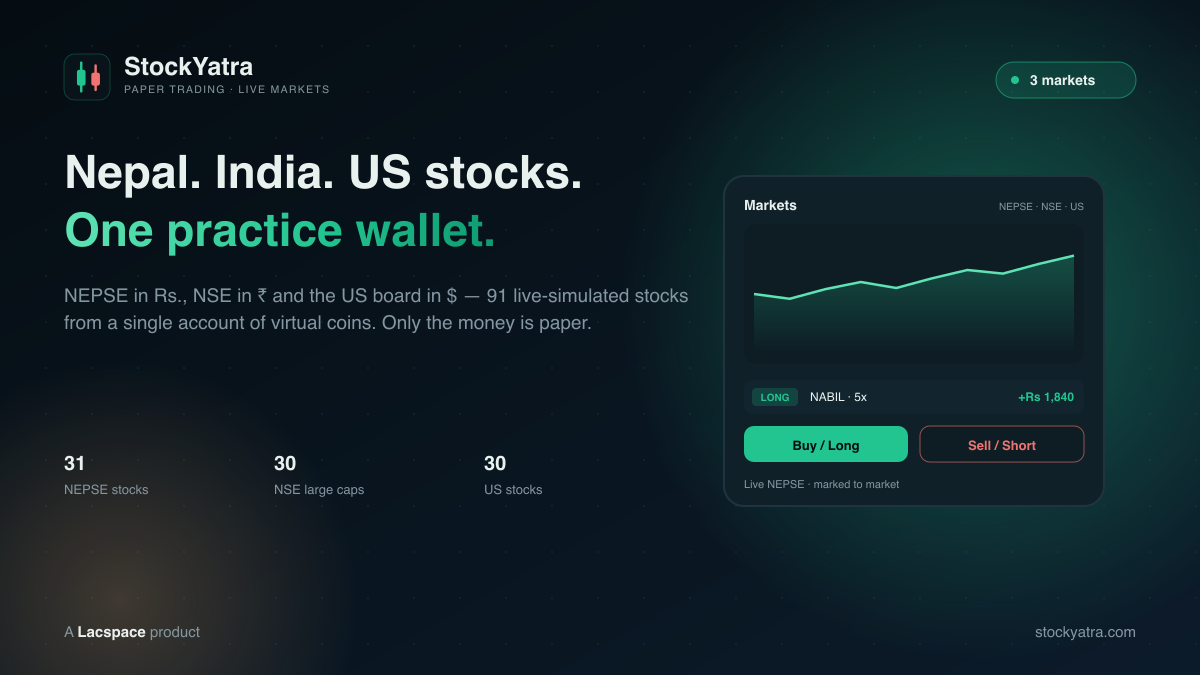
- Three markets, one wallet. Nepal’s NEPSE (31 stocks, Rs.), India’s NSE (30 large caps, ₹) and US stocks on the “Forex” board (30, $) — 91 live-simulated stocks from the same 10,000 starting coins. How the three boards work.
- A community inside the app. Global chat for every verified trader, friend requests, private direct messages and the Yatra Users directory. The community update.
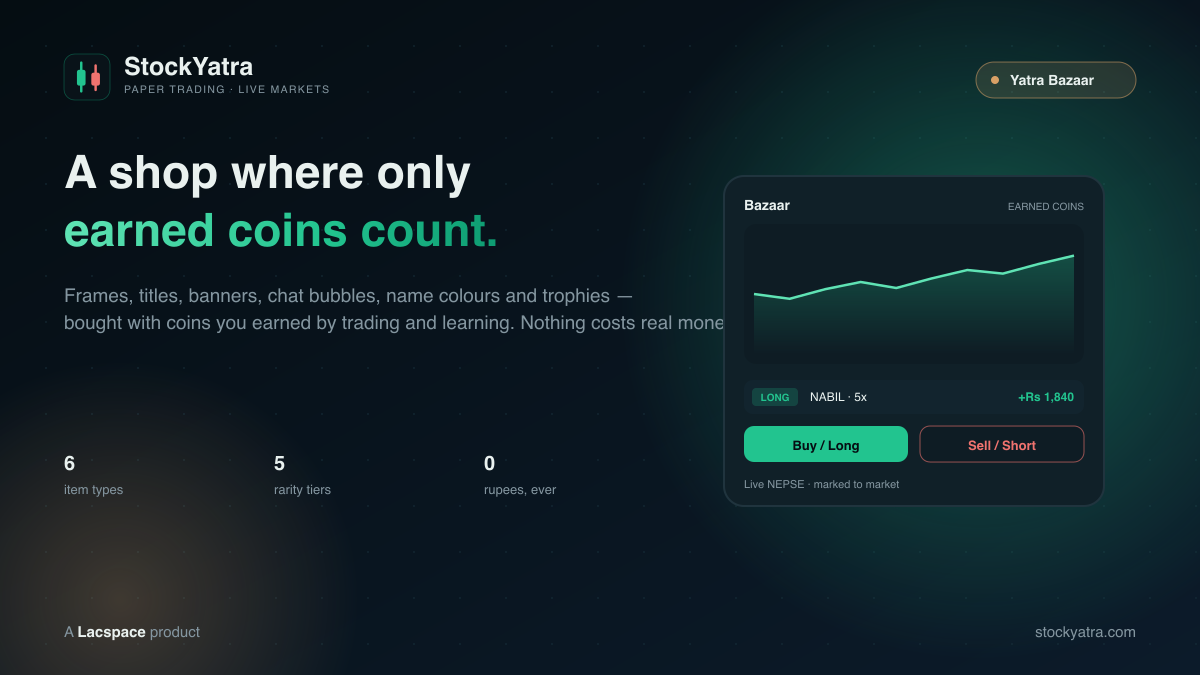
- Yatra Bazaar. A cosmetics shop — frames, titles, banners, chat bubbles, name colours and trophies — paid for only with coins you earned by trading and learning, then equipped, gifted or pinned on your profile. Inside the Bazaar.
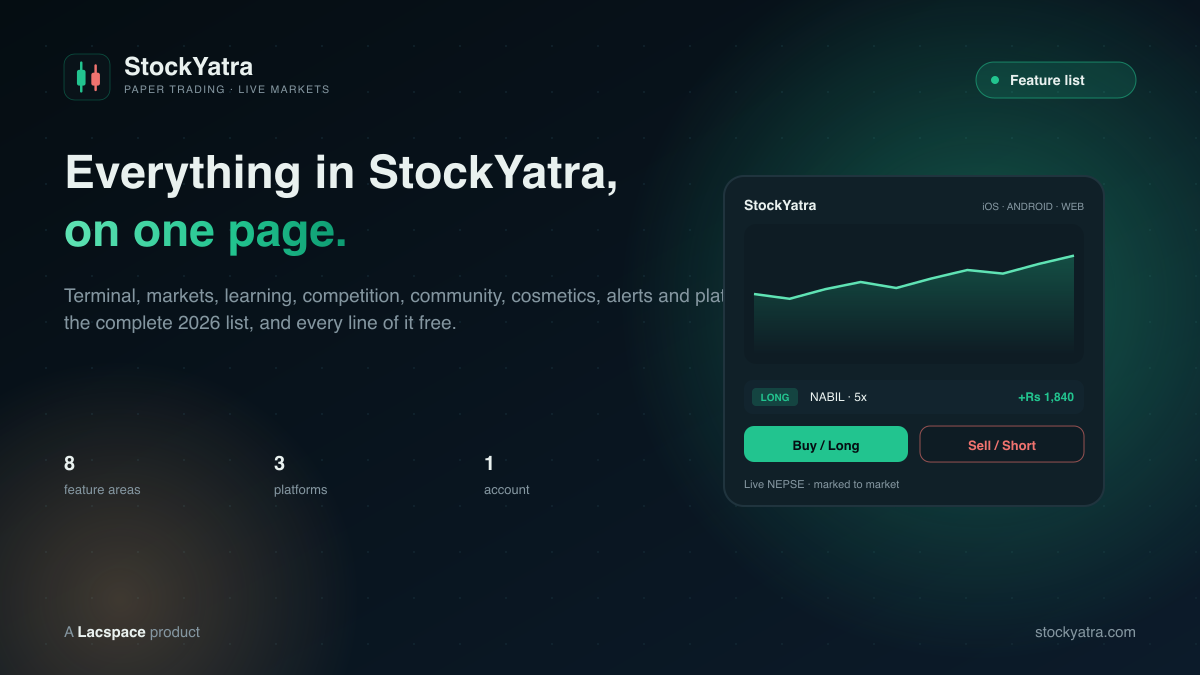
- Everything else still free. Rs 0 per trade, the 57-course academy, leagues and the live leaderboard, achievements and the Trader Card, price alerts, watchlist and session replay — on iOS, Android and the web terminal with one account. Why it is Nepal’s top paper trading app · the complete feature list.
Keep reading: Paper trading app in Nepal · How to start trading in Nepal without losing money · How StockYatra works
StockYatra is an educational paper-trading simulator. It uses virtual coins with no monetary value, does not facilitate the buying or selling of real securities, and does not constitute investment, financial or trading advice. Market data is for learning purposes only.
Frequently asked questions
What is the difference between paper trading and real trading?
Paper trading uses virtual money on real (or realistic) market data, so mistakes cost nothing. Real trading uses your actual capital, so mistakes cost real money and carry real emotional pressure. The mechanics — orders, charts, stop-losses — are the same; the stakes are not. Paper trading is where you build skill; real trading is where you apply it.
When should I switch from paper trading to real trading?
Switch when you’re consistently profitable on paper across many sessions (not a lucky streak), you always use a stop-loss, you follow a written plan rather than emotion, you size positions sensibly, and reviewing your trades shows real improvement. If those are true, you’ve earned the right to risk real money — start small.
Is paper trading actually useful?
Very — as long as the simulator is realistic. It lets you learn order mechanics, chart-reading and risk management with zero financial risk, and (on tools like StockYatra) replay sessions to practise deliberately. The one thing it can’t fully replicate is the emotion of real money, which is why you start small when you switch.
How long should I paper trade before going real?
There’s no fixed number of weeks — go by results, not time. Trade on paper until you have a consistent, positive record across many different market conditions and your risk habits are automatic. For most beginners that’s months, not days. StockYatra’s analytics and session replay help you see when you’re genuinely ready.